
Upgrade and join us in the clubhouse to access the video breakdown for this post and more!
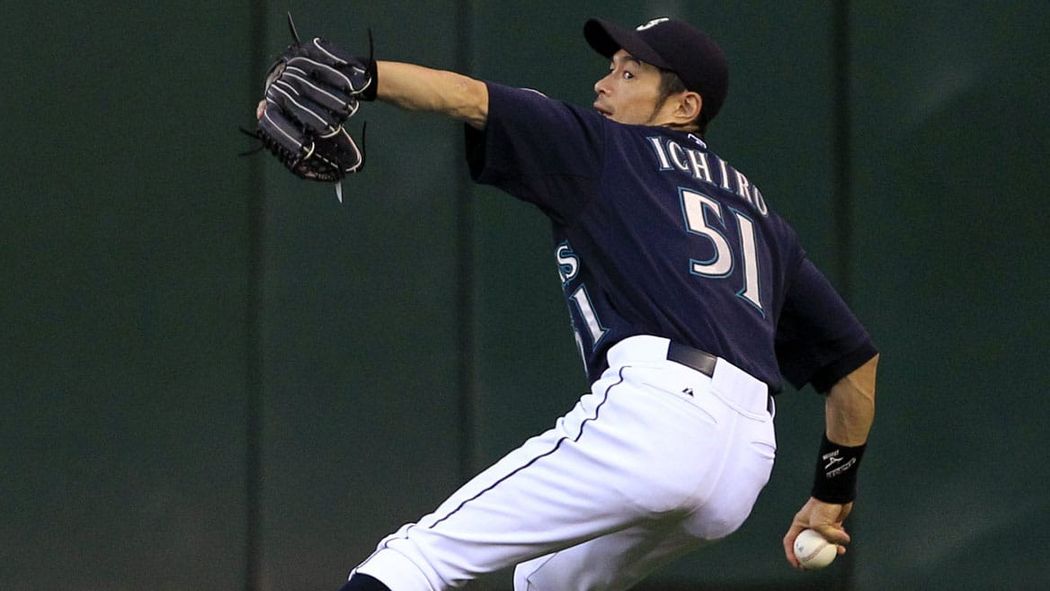
Contrary to popular belief, not every Major League outfielder has a rocket launcher for an arm. These guys are also playing every single day. The likelihood that their arms feel great all the time is very slim. But the reality is you don't need to have a rocket launcher to be an effective thrower in the outfield. Even if you have the best arm in your league, it's rare that you get opportunities to throw guys out. Most throws you make are about preventing runners from taking extra bases, not actually making an out. With this in mind, below is how you should execute double cut throws.
What is a Double Cut?
By the time you're in high school, you should know what double cuts are and when they are used. In short, "a double cut" is used when we know there is a "sure double." When a ball is hit down either line or into a gap and we know the hitter is going to achieve a double, we get into a double cut formation and line up to 3rd with nobody on or to home with a runner on 1st. These are often long throws being made from the outfield wall. We'll go over the actual spacing and positioning on double cuts in another post.
Well Executed Double Cut Relay
At the big league level, the fences are far. Most times when you see a double that gets to the wall, the runner will score from 1st base. To prevent that, you need a well executed relay like this one:
Langford vs. Jax, Top 3, Runner on 1st, 0 outs
A couple disclaimers before we discuss the outfield throw on this relay by Cedric Mullins:
- Joc Pederson is the runner on 1st. He's slow, so going 1st to home for him is tougher.
- There are 0 outs. With 0 outs the base coach is more likely to be conservative in this situation.
Now let's get into Mullins's technique on this throw and what you should implement into your double cut throws as an outfielder.
Getting Rid of the Ball Quickly
Remember the main principle I talked about on double cut throws. You are trying to prevent a runner from advancing, not trying to throw a guy out. That is the foundation for the technique.
A double cut throw is long, but that doesn't mean it needs to be a head high laser. It is more effective to get this ball out quickly than to take 3 steps to rear back and fire it. Check out Mullins's feet here as he collects the ball and throws it in.
Mullins Throw
No steps. He uses his legs to throw the ball, but gets rid of it super quickly. Why is this more effective in preventing the runner from advancing? Think about it from the 3rd base coach's perspective. He's got a guy running straight at him while watching you out in the outfield. He sees you pick it up, but instead of throwing it right away, you're taking a crow hop and the ball hasn't left your hand yet. If he doesn't see the ball in the air, he's going to keep the windmill going and send the runner home. If he sees the ball in the air and already coming back in toward the infield, he's going to put up a stop sign. This accomplishes our goal of getting the runner to stop, even though we're not going to throw him out.
Getting the Ball Up in the Air
If you're not going to take the crow hop before you throw, you're going to have less on the throw. That's fine, but that means you need to throw the ball up in the air. If you throw it on a line. It's not going to make it to your infielder. Double cut relays are just like double plays. It is the receivers job to be the athlete and make the play. You just need to give the infielder something he can handle. What you can't do is this...
Muncy vs. Webb, Top 4, Runner on 2nd, 0 outs
You see here Gilbert gets rid of the ball quickly, but he short hops the infielder. The Dodgers had held up Tucker at 3rd base, but because Gilbert's throw kicks away, Tucker is able to score. In a double cut scenario, it is better to over throw the 1st guy than short hop him. If you make the throw with any arc at all, and overthrow of the 1st man will land in the 2nd man's lap.
Going back to our good example, look at the arc on Mullins's throw. He doesn't try and throw a laser. He gets the ball in the air quickly and with good arc and everyone stops running.
Summary
One of my outfield principles is "if you catch everything that's in your catch radius, but don't throw any guys out over the course of a whole season, you've still had a good season defensively." It's really rare that outfielders throw guys out. It's a weapon if you can, but it's not totally necessary to have a cannon. You just need to make sure you have a good enough arm and a quick enough release to prevent baserunners from continuing and base coaches from waiving runners.