
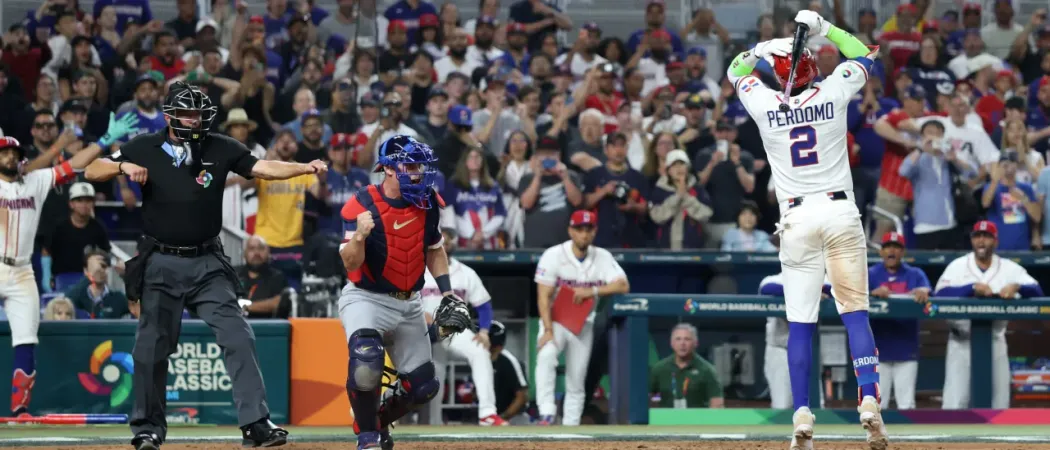
There was no shortage of drama at the 2026 edition of the World Baseball Classic. Much of it involving Team USA who eventually lost to Venezuela in the championship after miscalculating their standing prior to their loss to Italy and beating the Dominican Republic on a "controversial" call to end the game.
The Situation
Entering the bottom of the 9th inning, USA led the Dominicans 2-1. Mason Miller came in to close for the U.S. and struck out Junior Caminero to start the inning. He then walked Julio Rodriguez who advanced to 2nd on a wild pitch and then to 3rd on a groundout by Oneil Cruz.
The table is set: tying run on 3rd base, 2 outs. No margin for error. A wild pitch, pass ball, or base hit ties the game. And when a pitcher is throwing 102mph all over the place, the likelihood of that wild pitch or pass ball is significantly higher.
The At-bat
Gerardo Perdomo is not a name that the casual baseball fan may have known before Sunday night. He's a 26 year old that plays for the Diamondbacks and is coming off his best season in which he hit .290 and slugged 20 home runs. He's a good player and in this instance he had the weight of his country on his back. Make no mistake, this is the Super Bowl for the Dominicans. They celebrate no other sport like they celebrate baseball and for a country of only 11.5 million people, they are by far the most talented baseball country per capita in the world.
Perdomo had a great at bat. He worked the count to 3-2 and fouled off another two pitches before he struck out looking at this:
It was unfortunate because it was such a great at bat, but it sent the Americans to a St. Patrick's Night duel with the Venezuelans for the WBC championship. Now let's examine this a little closer, because I think at first glance people are thinking that this is egregiously bad and one of the worst calls in baseball history. While it is probably a ball, let's talk about some of the nuances outside of the box on your tv.
The Actual Pitch Location
In order to rationally talk about this pitch, we need to remove the box on our tv's from our mind. I hate the box. It's never correct (especially height wise) and it gives new viewers a false sense of what the strike zone is.
The bottom of the strike zone is defined as "just below the kneecap". That's a loose definition, but that is literally what is written in the MLB rule book. This ball crosses Perdomo's front leg just below the kneecap as you can see here:
The box on tv would have you believe that this ball almost touched the dirt.
Why It's a Strike - The Diamond Shaped Strike Zone
Honestly, even by definition I think it's a little down. But here is a lesson for all players. The perceived strike zone (by the umpire) can be thought of as having more of a diamond shape. If you throw the pitch more in the middle of the plate, you are more likely to get a strike call on a pitch that's a little bit down or a little bit up. If you throw a pitch at a player's thigh (middle of the height of the strike zone) you are more likely to get a little bit of width off the plate for strikes.
This played a role in this pitch being called a strike. It's RIGHT IN THE MIDDLE of the plate, so even though it's a little down, it's more likely to be called a strike.
Why It's a Ball - Earning Your Extended Strike Zone
In a coin toss, I'm always going to side with the hitter. You have so much less control over your results as a hitter than you do as a pitcher that you should be rewarded when the other guy isn't doing an adequate job. If a pitcher is going to get an extended zone, he better have earned it.
How does a pitcher earn an extended zone? Mostly by consistently being in the strike zone and throwing competitive misses. Not misses that are making the glove move a whole foot. In this case, Mason Miller was ALL OVER THE PLACE. He only got ahead of one hitter (the first hitter he faced), he walked another, he threw a wild pitch and his misses were not competitive or consistent. He actually threw more balls out of the strike zone than in it, but did get some chase swings to get his strike percentage up over 50 percent (which still isn't good). These are the charted pitches for each at bat:
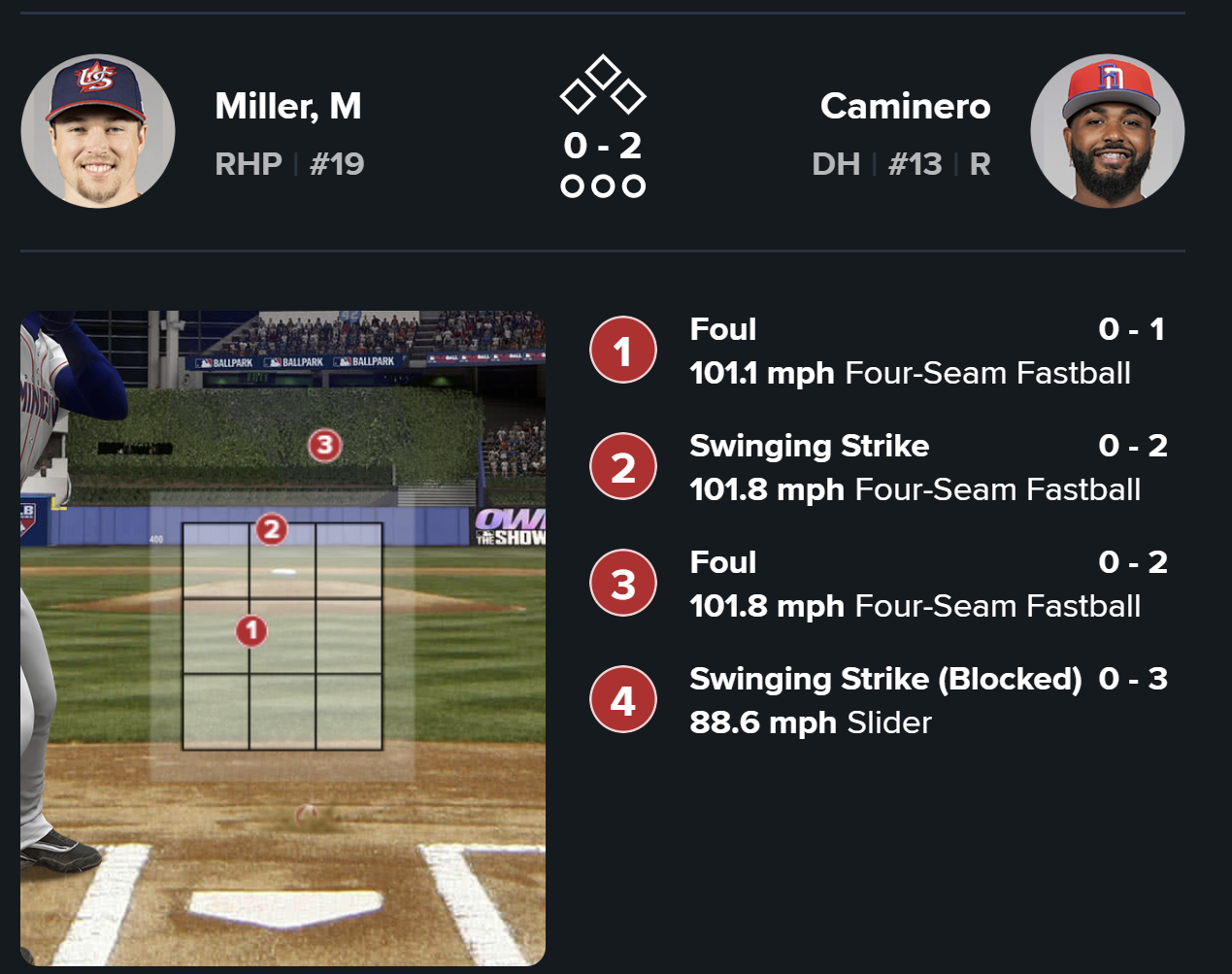
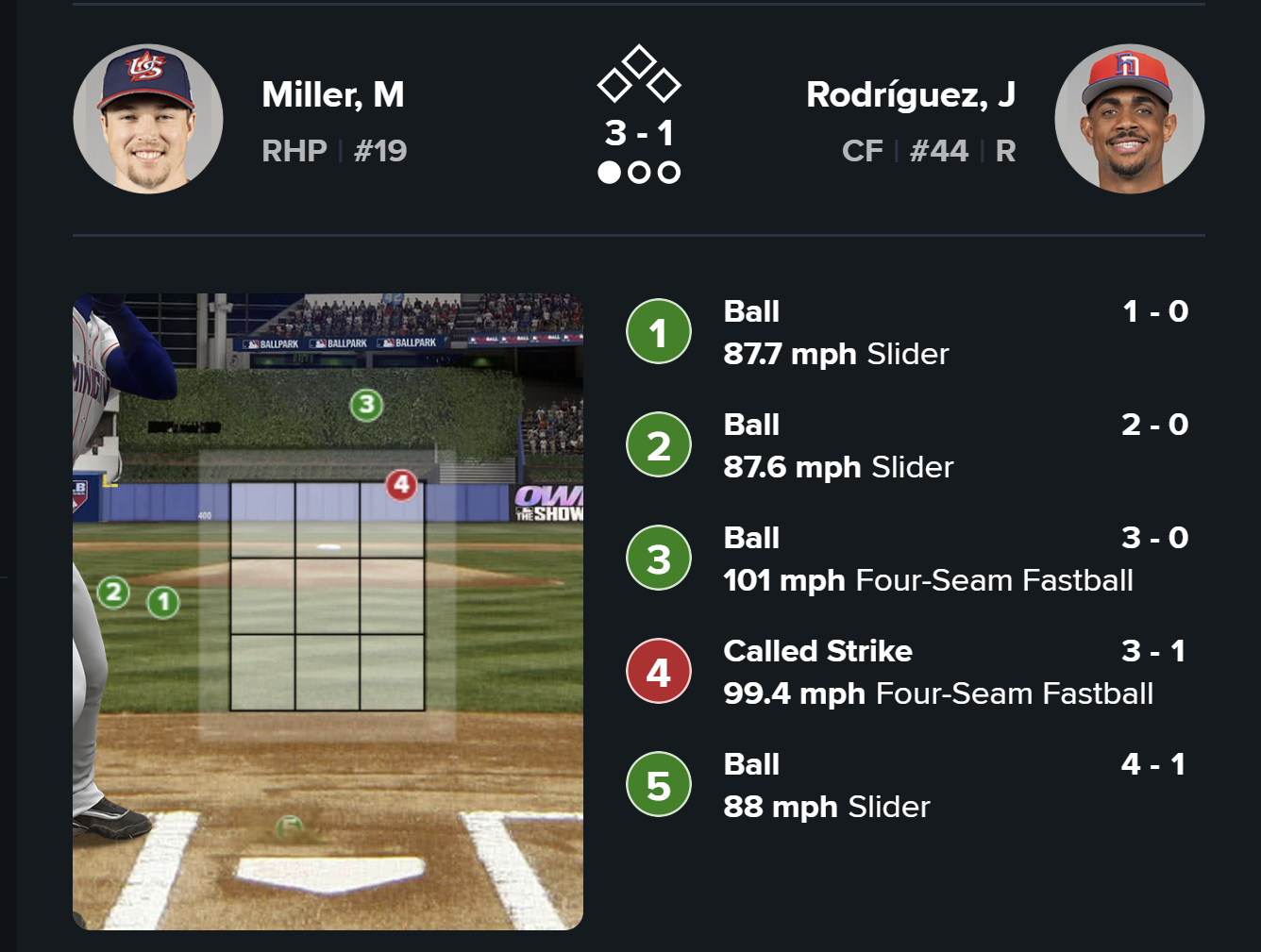
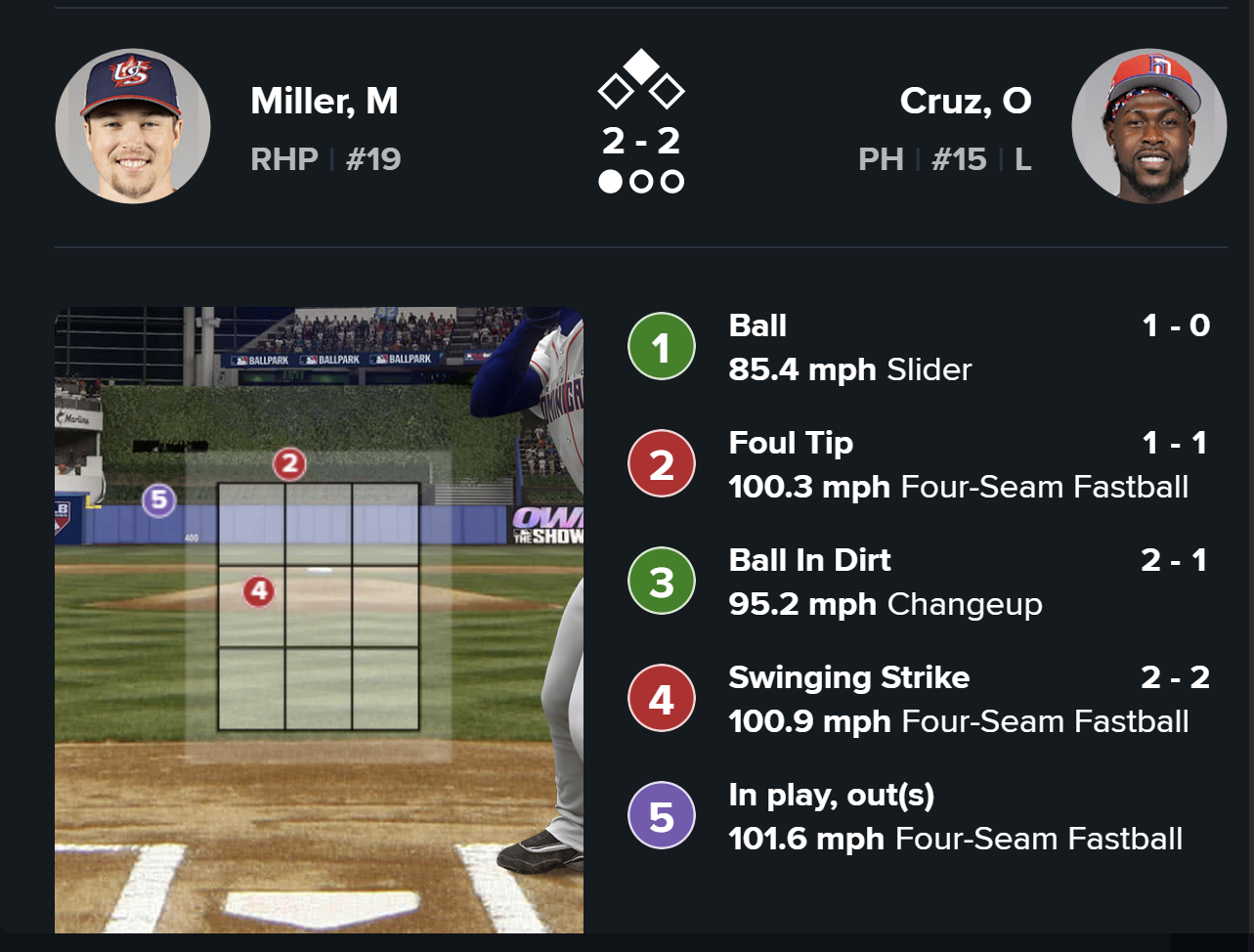
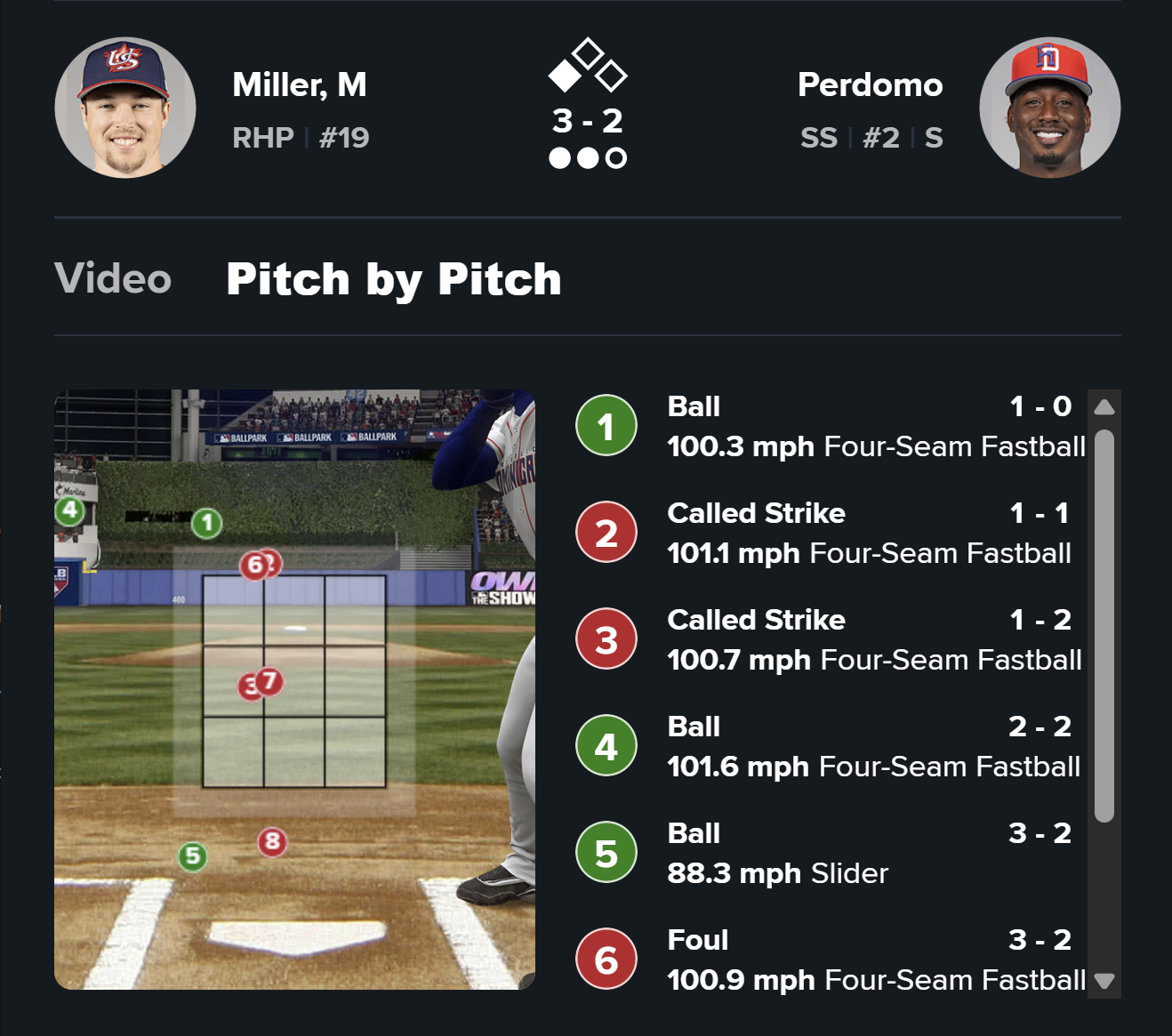
You see here that some of the balls don't even register on the grid because they missed the zone by so much. Pitch 8 in the last at bat is the last strike of the game. It didn't cross Perdomo's front knee this low, but if I'm a hitter and I'm up there battling and then you reward a guy who doesn't have a clue where the ball is going, I'm going to be pretty upset. This should be the Dominican's biggest gripe and what leads me to a problem you might start seeing a lot of this year...
ABS (Automated Ball-Strike) System
Starting this year, players are going to be able to challenge balls and strikes in a limited fashion. The players are mostly for it, so I think it probably needs to be implemented in some way. However, it is definitely going to take away the nuances talked about above, which I believe are supposed to be part of the game.
How this is going to work is if a hitter or pitcher doesn't like a call, they will tap their helmet indicating they would like to "challenge" the ball or strike call. Then we'll see the tennis charade where the ball will be shown on the jumbotron flying into (or out of) the strike zone. Whatever the result of that video is, will be the new result of the pitch.
A pitch that misses the strike zone .01 inches below the strike zone could now be changed from a strike to a ball. The nuances from above aren't going to be completely eliminated because you only get 2 of these challenges per game, but you can see the direction the game is heading. Less human element, which means less earning your strike zone and less overall feel for the game from both players and umpires. As the season starts, try and look out for these instances where it feels like a strike zone is too big or too small and figure out what might be causing that.